I am participating in a six month global online course exploring The Spiritual Dimensions of Healing led by Thomas Hubl.
During his monthly teachings I found myself creating images to
represent the concepts being offered, something inside taking visual
form - a graphic harvest.
I share them here with some context . . .
Thomas
spoke about new questions emerging and the sense of freedom in this
process that ripples back and grounds and begins again. This brushstroke
came forth -
He described the nervous system like a lightning rod - gathering light and energy -and grounded by who has come before . . .
There can be a perception that some people are less conscious and cannot take in these teachings. He spoke about this as transcendence without inclusion and offered a larger view, a way to create a bigger circle.
Thomas
was describing a big stream of unbroken light that leads up to each one
of us. I began to draw this river of beings. Then he was speaking about
transgressions and the entanglement that creates for both and the
freedom of restoration - within a relationship and inside each of us.
At the end of a conversation between Bayo Akomolafe and Thomas, Bayo offered this image - a call - to step away from safety and move. He called it the spirituality of the cracks.
Thomas
described the fragmentation of trauma. He said that through this inner
work the pieces of text can come back into alignment and begin to make
sense. This is what I saw . . .
In a live process session with a participant these images were offered and some simple settled shapes appeared on my page -
A
question was asked about how to join divine and grounded energies
within ourselves. As I drew this tree and painted the light within I
felt my depleted state becoming restored and energized again.

Pat
McCabe, Woman Stands Shining, a Diné (Navaho) elder offered teachings
on the support that we can draw on from the elements. She held up a
glass of water . . .
She spoke about fire -
and our relationship to the future - and the past -
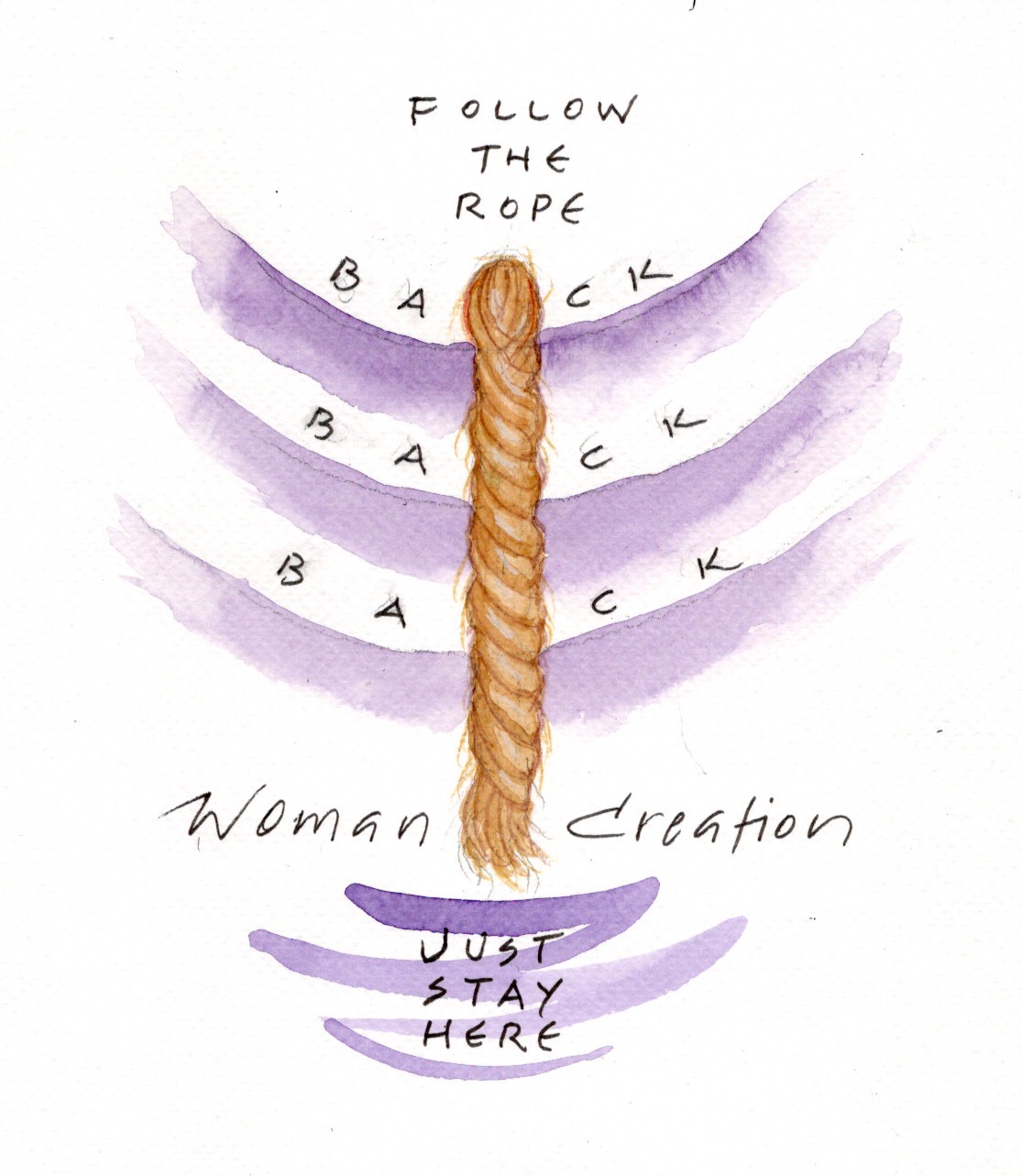
She described dropping back and back into the past holding a rope - which ended up here looking like a braid -
Then Thomas Hubl in the next session spoke about elements of grace coming down and blessings arising. This is what I saw -
And the inner landscape that we each carry.